|
To create ethical and responsible leaders who use their knowledge and field experience to promote fairness and equity in the justice system.
|
|
Chair’s Welcome Letter
|
| |
|
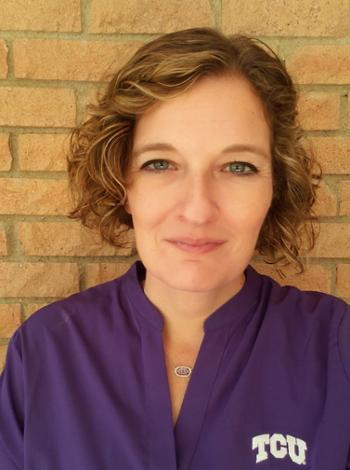 What a spring! Jade has produced another great newsletter for you to enjoy. You’ll hear from some of our outstanding students and faculty on their experiences within and beyond the department so far this year.
The absolute highlight was our Green Chair speaker, Bryan Stevenson, founder and Executive Director of the Equal Justice Initiative (EJI), a human rights organization based in Montgomery, Alabama. The renowned public interest lawyer, who has led EJI in eliminating unjust sentencing, delivered an inspirational and poignant talk to approximately 600 attendees at the second annual Dream Justice event on February 23rd in the Brown-Lupton University Union (BLUU). The event was hosted by our department in collaboration with Brite Divinity School's Center for Theology and Justice and Comparative Race and Ethnic Studies.
Congratulations to all our undergraduate majors, minors, and master’s students who graduated with Criminology & Criminal Justice degrees this spring! We have enjoyed getting to know each of you and wish you all the best in your future careers. Please check in along the way and let us know what you’re up to! Current graduates and alumni alike, I encourage you to keep your info up to date with the TCU Alumni Association so you can keep in touch with us and each other: connect.tcu.edu/home.
Gifts may be made to the Criminology & Criminal Justice Department at the following link: https://advancement.tcu.edu/new/makeagift/. After clicking on the link, select “other” for the designation and then type in “TCU Criminology & Criminal Justice Department Gift Fund” in the comment section. Any gift is greatly appreciated, thank you!
Have a restful and safe summer!
|
 |
Brie Diamond, PhD
Professor and Chair
Department of Criminology & Criminal Justice
|
|
| |
| Update from Undergraduate Program Director Dr. Katherine Polzer |
| |
| |
| |
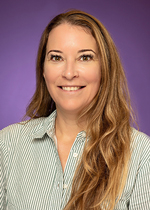 It’s hard to believe that we are finishing up another great school year, and this spring has been busy and filled with lots of fun activities! In February, Dr. DeShay and I, along with nine amazing students, went on our annual tour of two prisons in Huntsville, Texas. It is always a great trip for learning, reflecting, and, of course, a quick stop at Buc-ees.
To top off the action-packed month of February, we hosted Green Chair Speaker Bryan Stevenson, founder and Executive Director of the Equal Justice Initiative (EJI). He absolutely captivated the audience with his incredible talk. Our department collaborated with Brite Divinity School and the Comparative Race and Ethnic Studies Department to bring Mr. Stevenson to campus, and he did not disappoint. It was a night we will not soon forget!
Our exceptional student organization, Criminal Justice Society, hosted a professional development workshop with Criminology & Criminal Justice Internship Director Dr. Ronald Burns and AddRan College of Liberal Arts and School of Interdisciplinary Studies Career Consultant Dr. Emmanuel Garcia. Students received personalized instruction and feedback focused on résumé development. Right before spring break, we hosted our annual Criminal Justice Networking Night, and it was another tremendous success with participation from numerous agencies and several of our alumni.
After spring break, our Mock Trial Team held tryouts for the upcoming academic year. Criminal Justice Society completed our annual “documentary book club series,” with the group watching and analyzing the docu-series, “Aileen: Queen of the Serial Killers.” We rounded the year out with our Graduating Seniors and Awards banquet at Rex’s.
It has been an incredible year! Congratulations to our recent graduates — we will miss you all so much! For those who haven’t graduated, we already have some amazing activities and events scheduled for next school year, including commemorating Wrongful Conviction Day on October 2nd with multiple panels and a keynote speaker. Have a great summer, Horned Frogs, and we can’t wait to see you in August! 🐸 💜
|
| |
| |
|
| |
| |
Graduate Program Update with Dr. Kendra Bowen & Dr. Michele Meitl
 This is an exciting time for our Graduate Program as we celebrate continued excellence and meaningful milestones. We are proud to announce that our program is now ranked #3 in the nation by U.S. News & World Report. This recognition reflects the exceptional work of our faculty and the dedication and talent of our students. While we have always known the strength of our program, it is incredibly rewarding to see that excellence is continually recognized on a national level.
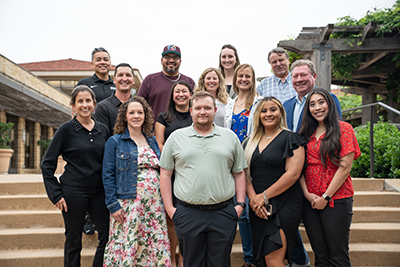 |
| Graduates of the 2026 TCU Criminology & Criminal Justice Master of Science Program celebrated their achievement on April 29 at the Dee J. Kelly Alumni Center. Pictured are members of the Class of 2026 with graduate program faculty. Photo credit: Glen E. Ellman |
Our first-year cohort continues to thrive this semester, successfully navigating both Policing and Statistics courses. Beyond the classroom, students gathered for a cohort social at Lot 12 on April 9th, which provided a valuable opportunity to connect and build community. They enjoyed a brief break in May before beginning summer coursework.
May marked an important milestone as we celebrated 15 graduates earning their Master of Science in Criminology & Criminal Justice. In honor of their achievements, the department hosted a celebratory dinner on April 29th. We extend special congratulations to Shawn Callerman and Tyler Vinton, recipients of the Outstanding Graduate Student Awards, for their exemplary performance and contributions to the program.
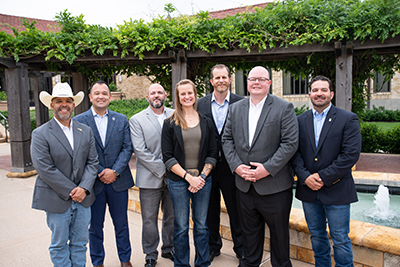 |
| The 2025–2026 members of The Leadership, Executive & Administrative Development (LEAD) Program celebrated the completion of their certification at the Dee J. Kelly Alumni Center on April 26. Pictured are members of the cohort. Photo credit: Glen E. Ellman |
We also recognize the accomplishments of our LEAD Certificate participants. This semester, six law enforcement officers from across the DFW area completed the Leadership, Executive, and Administrative Development (LEAD) Certificate. Notably, Bobby Castillo, Victor Hernandez, and Johnny Qualls will continue their academic journey in our online graduate program. Congratulations to Bobby Castillo, who was honored with the Neil Noakes LEAD Founders Award. This group was celebrated alongside their families and colleagues on April 26th.
Finally, we look ahead to exciting leadership transitions within the program. Dr. Michele Meitl will assume the role of Graduate Program Director this fall. Her leadership as Assistant Director has been instrumental, and we are confident she will continue to elevate the program. We are also pleased to welcome Dr. Benjamin Comer as the incoming Assistant Director.
We look forward to another strong year ahead as we continue to build on this momentum.
Drs. Kendra Bowen & Michele Meitl
|
|
| |
| Criminology & Criminal Justice Co-hosts Wrongful Conviction Day Panel Event with the House of Renewed Hope |
| |
Ninety-seven individuals were exonerated for crimes they did not commit in 2025, according to the National Registry of Exonerations. This grave statistic, along with the tremendous anguish and unjust penalties faced by wrongfully convicted individuals and their families, underscore the necessity of innocence advocacy work.
Over the past several years, the TCU Department of Criminology & Criminal Justice has largely supported innocence advocacy efforts in a variety of ways. In observance of International Wrongful Conviction Day, the department co-hosted a Wrongful Conviction Day Panel event with the House of Renewed Hope on October 2nd, 2025 at Brown-Lupton University Union (BLUU).
The five-hour event featured panels of judges, attorneys, and investigators with expertise in innocence litigation, as well as exonerees who shared personal narratives about serving prison sentences as a result of false convictions.
Associate Professors Dr. Katherine Polzer and Dr. Rashaan DeShay collaborated with the House of Renewed Hope Founder and CEO Christopher Scott to make the event a reality.
“Christopher Scott reached out to judges, attorneys, advocates, investigators, and other exonerees, who all agreed to participate,” Dr. Polzer shared. “Our goal was to host individuals who have a connection to the justice system, but also have some relationship to wrongful convictions in terms of investigating these cases, representing those who have maintained their innocence and been wrongfully convicted, and judges who have experience presiding over these types of cases or declaring someone innocent.”
Fostering education and awareness regarding innocence advocacy and litigation to students and the broader community served as a top priority in hosting the event.
“We have students who want to work in the justice system, and so it is very important they understand that sometimes these situations happen,” Dr. DeShay said. “And, it may not be because someone, such as an officer or prosecutor, is ill-intentioned.”
Dr. DeShay said that wrongful convictions can occur when members of the legal system succumb to tunnel vision.
“They can become focused on a particular person and decide the person is, indeed, guilty,” Dr. DeShay explained. “Psychologically, they then can kind of start to ignore evidence that suggests the person in question is innocent.”
Understanding that these tragic scenarios happen and how they happen is key, according to Dr. DeShay.
“When students start to engage in this type of work themselves, our hope is that they remember what they learned in our program and carry this knowledge into their careers,” Dr. DeShay said. Scott shared his own powerful account of being wrongfully convicted of capital murder in 1997 and serving 13 years in prison during the exoneree panel.
“I think the exoneree panel was probably the most impactful,” DeShay shared. While we can discuss people who have been wrongfully convicted, it’s different to see three men sitting in front of you, one whom served 27 and a half years in prison for a crime he didn’t commit, and to hear them tell their stories about how they survived incarceration as someone who’s innocent, how they got help, and how it took a long time to get help, as well as how they eventually were exonerated and what they’re doing today.”
Dr. Polzer said that she echoes Dr. DeShay’s sentiments regarding the soul-stirring testimonies shared by the exoneree panel.
“There was an attorney who was supposed to attend but couldn’t because her client was set to be executed in approximately two weeks from the event date, although many felt like it was a wrongful conviction,” Dr. Polzer shared. His execution ended up being stayed, but I think that was powerful, as well, when we let the crowd know, ‘Sorry, she couldn’t attend because she’s literally fighting for one of her clients’ lives’.”
Dr. Polzer said that a misconception of wrongful convictions is that they occur more than the public realizes.
“I believe many think that wrongful convictions happen occasionally and are due to true, human error, which can sometimes be the cause, but the more we look into these cases and the more we find, it’s not always just an accident,” Dr. Polzer said. “A lot of other factors contribute to wrongful convictions besides human error.”
Attorney panelists were particularly instrumental in illuminating the complexities of innocence advocacy, according to Dr. DeShay.
“In terms of innocence advocacy, itself, our second panel featured attorneys who represent individuals fighting to prove their innocence,” Dr. DeShay said. “We were able to shine a light on this type of work – how difficult it can be, how frustrating it can be, how long it can take to aim for successful outcomes on these cases, and how sometimes successful outcomes are not reached.” Dr. Polzer said that she recommends anyone interested in engaging in innocence advocacy efforts to learn as much as they can about the topic and develop an understanding of how wrongful convictions can happen.
“Reach out to these innocence advocacy groups,” Dr. Polzer said. “You don’t have to be a lawyer or a professor to become involved. You can find information on their websites regarding ways to donate time and money. They always need volunteers for a variety of causes. Even just fund-raising is an integral part because these are all non-profit organizations.” Dr. DeShay said that she recommends that anyone interested in learning about innocence advocacy visit the National Registry of Exonerations website.
“A few different law schools and organizations track data for the site,” Dr. DeShay explained. “They track exonerations that have occurred in this country since 1989. Every time someone is exonerated and they find out about it, they update the numbers. So, you could visit the site on a Monday and find one number for the total amount of national exonerations, and by Friday, that number could change. They also produce annual reports.”
Wrongful convictions constitutes an area of injustice that requires more attention, resources, and advocates to oppose it, according to Dr. Polzer.
Both Dr. Polzer and Dr. DeShay said they plan to continue help making the department’s wrongful convictions panel an annual event commemorating International Wrongful Conviction Day. “We are just grateful to have had the support and to have had people who took the time not only to serve as panelists, but also to listen to the panels,” Dr. DeShay said. “We are excited to continue the event and improve upon it each year.” |
|
| |
| Intern Experience Highlight – Justus Bedford |
| |
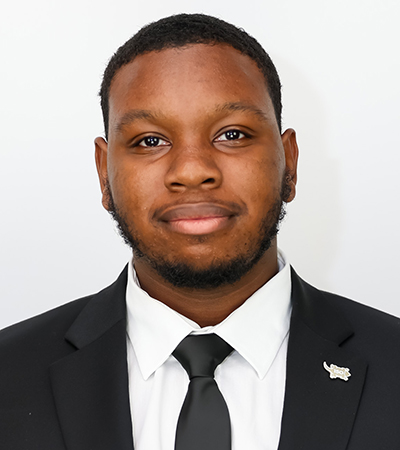
Justus Bedford graduated from Texas Christian University in May 2026 with a Bachelor of Science degree in Criminology & Criminal Justice. He completed a pre-law track and minored in Digital Culture and Data Analytics. Originally from DeSoto, Texas, he built a record of academic and community leadership on campus, serving as President of the Black Student Association, Treasurer of the Big XII Council, and an officer in his fraternity chapter. This spring, he completed an internship with the House of Renewed Hope, an innocence advocacy organization, where he analyzed case files and provided formal recommendations on potential wrongful conviction cases. Justus plans to continue his education in graduate school, with a focus on crime analytics and criminal justice, driven by a commitment to using data as a tool for equity and systemic change.
 Criminology & Criminal Justice: What inspired you to seek an internship with the House of Renewed Hope?
Justus Bedford: My academic focus has always been at the intersection of criminal justice and data analytics, and a big part of why I chose that path is a genuine concern for how the system can fail people. Wrongful convictions represents one of the most serious failures the system can produce, where someone's entire life is altered because of a mistake, or worse. When I came across the House of Renewed Hope, the mission immediately resonated with me. I had already done research on wrongful conviction cases through a prior internship, so I knew the weight of that work. This felt like a natural next step: a place where I could actually contribute to correcting those failures, not just study them from a distance.
Criminology & Criminal Justice: Describe the day-to-day details of your internship, as well as all of the duties you perform.
Justus Bedford: Because the internship is fully remote, I had the flexibility to structure my own schedule, which I've found suits the depth of the work. I typically put in around 10 to 15 hours per week. My primary responsibility was case analysis. I received case files and dug into the details, looking at the facts, the evidence, and any inconsistencies or red flags that might suggest a wrongful conviction. From there, I put together a written synopsis of the case and a formal recommendation on whether the organization should take it on and whether I believe the conviction may have been unjust. It is careful, methodical work. Every case involves a real person, so I take that seriously.
Criminology & Criminal Justice: What are your favorite aspects of the internship?
Justus Bedford: Honestly, the meaning behind the work is what keeps me going. It is one thing to study criminal justice in a classroom and another thing entirely to be sitting with a case file knowing that your analysis could influence whether someone gets a second look. I also really value the independence the role gave me. I am not just completing tasks handed to me; I am exercising real judgment and producing work that matters. And there is something powerful about knowing that for someone who feels like the system has moved on from them, organizations like this one are still paying attention and still fighting for them.
Criminology & Criminal Justice: How is the internship advancing your professional development and expanding your skill set?
Justus Bedford: This internship has sharpened skills I will carry into my career regardless of where I land. My ability to read and synthesize complex case information quickly has gotten significantly stronger. Writing clear, well-reasoned recommendations under real stakes is different from writing papers for a grade. It pushes you to be precise and intentional with every word. I am also developing a stronger instinct for what makes a case compelling versus what is just noise. Given that I am pursuing graduate study in crime analytics and criminal justice, building that analytical foundation right now is invaluable. I am learning how to think like a practitioner, not just a student.
Criminology & Criminal Justice:Explain the importance of an organization such as the House of Renewed Hope and innocence advocacy work, overall.
Justus Bedford: The criminal justice system is designed with a lot of safeguards, but it is not infallible. People get convicted for crimes they did not commit, and when that happens, the system does not always self-correct. Innocence advocacy organizations fill that gap. They are the ones who say this case deserves another look, and this person deserves to be heard. That work matters deeply because we are not just talking about legal outcomes. We are talking about people's lives, families, and freedom. Beyond the individual cases, organizations like the House of Renewed Hope, hold the system accountable in a way that promotes broader reform. They are part of why people can still have faith that the truth has a chance.
Criminology & Criminal Justice:What encouragement would you provide to other students who may be thinking of applying for an internship with the House of Renewed Hope?
Justus Bedford:Do it. If you have any interest in criminal justice reform, wrongful convictions, or just doing work that carries real weight, this is the place. You do not need to have all the answers before you apply. What matters is that you are willing to engage seriously with difficult material and that you care about getting it right. The work will challenge you, but it will also remind you why you chose this field. Knowing that you are contributing to something that could genuinely change someone's circumstances is a feeling that no classroom experience can replicate.
Criminology & Criminal Justice: What advice would you give other students about finding an internship position that is the best fit for them?
Justus Bedford: Start with what actually matters to you, not just what looks good on paper. I have found that the internships that push your growth the most are the ones where you are personally invested in the mission. Do your research on organizations before you apply. Understand what they do, who they serve, and what kind of work you would actually be doing day to day. And do not overlook opportunities that seem smaller or less conventional. Sometimes those are the ones where you get real responsibility instead of just being handed busy work. Be honest with yourself about what you want to learn, then look for places that will make you work for it.
Criminology & Criminal Justice: What are your overall career aspirations in the areas of Criminology & Criminal Justice?
Justus Bedford:I want to work at the intersection of data and justice, using analytics to surface patterns of inequity in the system and drive evidence-based reform. I am applying to graduate programs in crime analytics and criminal justice, and my long-term goal is to be in a position where the work I do has systemic impact. Whether that is in research, policy, or advocacy, I want to be someone who uses data not just to describe problems, but to solve them. My time at TCU and experiences like this internship have reinforced that the field I have chosen is exactly where I want to be.
Criminology & Criminal Justice: Describe all of your extracurriculars, involvements, and achievements as a TCU student.
Justus Bedford: My time at TCU has been shaped as much by leadership outside the classroom as inside it. I currently serve as President of the Black Student Association, which has been one of the most meaningful roles of my college career. I have been responsible for organizing events, advocating for our community on campus, and mentoring students coming up behind me. I also serve as Treasurer of the Big XII Council, which has given me experience working across universities on shared student priorities. Within my fraternity, I hold an officer position that has kept me connected to a broader brotherhood and a community of accountability. Together, these roles have pushed me to lead with intentionality and to show up for people consistently, values that carry directly into my professional life.
Criminology & Criminal Justice: What are the start and end dates (duration) of your internship? How often are you involved with the internship per week?
Justus Bedford: My internship with the House of Renewed Hope began on December 7th, 2025, and culminated on April 18th, 2026, a span of just over four months. Because it was fully remote, I had the flexibility to set my own schedule, and I dedicated approximately 10 to 15 hours per week to the work. That flexibility was actually an asset. It allowed me to give each case the focused attention it deserved rather than rushing through material to meet a rigid deadline.
|
|
| |
| |
Faculty Spotlight: Dr. Patrick Kinkade
 Dr. Patrick Kinkade received his bachelor degrees from the University of California, Berkeley in psychology and anthropology, his Master’s degree in counseling psychology from the California State University at Los Angeles and his PhD in social ecology at the University of California at Irvine. He is currently a full professor in the Department of Criminology and Criminal Justice at Texas Christian University (TCU) in Fort Worth, Texas. He has authored over 40 academic publications and has spoken at numerous national and international conferences on issues of crime and justice.
During his 36-year career, he has taught a large variety of courses and served as the Chair of the Department for several years. He has also served as an advisor to a number of public and private agencies including Behavioral Systems Southwest, Tarrant County Probation Department, The Kinkade Family Foundation and the University of Central Florida’s Entertainments Management program. His areas of interest include organized crime, crime and the media, urban sub-cultures and policy makers perception of criminal justice policy.
Since 1995, Pat has been an integral part of the Thomas Kinkade Company. He has spent a lifetime with his brother both enjoying and creating art and is now doing the same with Zachary Thomas Kinkade, his son and Thomas Kinkade’s nephew. He has lent his expertise in many areas of company concern including product design, media and retail development, internet development and licensing. He has served as the host of several television shows in England, Australia and the United States.
Additionally, he, at a time, owned and operated the largest chain of independent Thomas Kinkade galleries in the United States. His personal passion is writing travel and children’s books. His most popular book, Chasing the Horizon, was co-authored with his brother, Thomas. Most recently, Pat serves as a Thomas Kinkade Company spokesperson, working with TKC Signature Dealers and their collectors in the very popular Heritage Tour, where he acts as an ambassador for his brother’s message of hope and inspiration through art.
Criminology & Criminal Justice:What characteristics of the TCU Criminology & Criminal Justice Department drew you to work here?
Dr. Patrick Kinkade: When I first came to TCU, the Criminal Justice program was relatively small. We only had two full-time faculty lines and were administered under the department of Sociology. Much of our curriculum was comprised of classes drawn from other majors, and you could actually get a degree in criminal justice without taking a class from a criminal justice faculty member. Yet, the faculty here were energetic and saw this as a prime opportunity to create something special. In effect, we were working with a blank slate! And so, we began building the Criminology & Criminal Justice major — one taught exclusively by Criminology & Criminal Justice faculty and offering topic specific classes in the field. It was exhilarating to have that much opportunity to define the major at TCU and eventually morph it into a standalone program. We also had a very strong sense of comradery as a faculty. We enjoyed each other and hung as a group. I came because I had an interest in building something foundationally and to do it with people who became my closest friends.
Criminology & Criminal Justice: When did you begin working at TCU, and how has the university changed since then?
Dr. Patrick Kinkade: I believe I started at TCU in 1989 or 1990, approximately 37 years ago. The time has gone quickly. The university has obviously grown in size since that time and has shifted some of its institutional focus toward research more than undergraduate teaching. However, it has still retained the sense of community that makes it a special place to attend and work. I have taught at four universities and have attended three others in pursuit of my degrees. I have never felt “community” in any of these other academies in the way it is present at TCU. Whatever its growth, TCU is still a home to build a career and inspires that kind of emotional attachment.
Criminology & Criminal Justice:: What aspects of your work at TCU appeal to you the most?
 Dr. Patrick Kinkade:This has changed over the years. I used to be very driven toward research. It excited me to generate data and think that for a few months before publication, I was one of a select few who knew the answer to a given research question. As I have aged, I find that I now gain my greatest joy in teaching. I really do view students as a hope for the future — for our society, our country and our planet. It is a metaphor well used but I think it holds truth. Student contacts are like pebbles being tossed in a pond. With every contact or splash there are ripples. It is these ripples that carry hope forward. So, with each “kerplunk,” I get the chance to help them in creating a better tomorrow.
Criminology & Criminal Justice: What class is your favorite to teach and why?
Dr. Patrick Kinkade: Without a doubt my favorite class to teach is “Critical Issues in Criminal Justice”. It is a class that allows the specific material covered to change as the instructor or students follow unique interests. It is also a class that inspires heathy debate about significant issues within society and the criminal justice discipline; topics such as the death penalty, the war on drugs, gun control and terrorism. But even more importantly, I hope the class inspires critical thought about all policies and controversial issues. It is not enough to simply vote if you want to contribute to the governance of a democracy. Your vote should be educated, removed from political ideology and religious theology, and tied to critical evaluation though scientific method. I tell my students in the class I am not there to give them their opinions but that I do want them to be able to justify those they hold on their own.
Criminology & Criminal Justice: What inspired you to pursue a career in the areas of Criminology & Criminal Justice?
Dr. Patrick Kinkade: I don’t think there was a specific defining event that led me down the life path I have taken. I sometimes point to an early read of the book, Helter Skelter, which is an account of the Manson murders. The book captivated me and started my habitual reading of true crime. But really, that story is too simplistic. My degrees are in psychology, anthropology and social ecology. Clearly, various tides of academic interest pushed and pulled me until I found my place here.
Criminology & Criminal Justice: What is your favorite published work and why?
Dr. Patrick Kinkade: Two articles come to mind as my favorites in relation to my academic work. The first is a paper called “The Driver,” an exploration of high-risk, low-paid occupations. There had been a spate of pizza delivery robberies during the time of its writing, and I took a driver position at a few pizza parlors to understand why one would work in those circumstances when safer jobs with equal pay were available. The article was picked up and included in an Introduction to Criminal Justice textbook as a “focus on research.” The author of the text called me to relate how much he enjoyed the work. The second article was called “Getting Hosed,” and it investigated theft at local carwashes. This particular article was covered by National Public Radio (NPR), and I was interviewed for a segment of their shows. The interview put me back in contact with several old friends.
I also have published a few popular press books, and I am particularly proud of “Chasing the Horizon.” This particular title was a travelogue and family memoir. My brother and I took my father back to places he visited as a young soldier during World War II. While traveling, he would share his wartime stories with us. Before this trip, I knew my father as my dad, but this experience allowed me to truly get to know him as a man. The time he spent in Europe was his personal crucible. The war changed him. He went in the army as an 18-year-old kid and came back grown up with a different perspective on life. The trip was a profound experience for all of us, and I am still proud of the effort put into the project.
Criminology & Criminal Justice: What advice do you have for students who want to pursue a career in Criminology & Criminal Justice?
Dr. Patrick Kinkade: It is a sad thing to say but it is true; crime is a growing business. There are jobs to be had in criminal justice across jurisdictions and the parts of the system. Still, study hard and stay out of trouble. Elite positions look for reasons to disqualify. Network as much as possible. The more folks know you, the better your chances to land a position you desire. Spend time gaining exposure to skills that cause you to stick out in a crowd. Second languages, for example, are a valuable qualification.
My advice to students in general is to follow their happiness. Life is short and each day a precious commodity that should not be wasted. Know that money is not a substitute for happiness. You will not wish for more of it on your death bed. You will wish for more time to do what you love doing with the people you love doing it with. Take that time now and as you can. Do it enough and you will have a life well lived. Oh… also, spend less time on your phones and more time engaging the world directly!
Criminology & Criminal Justice: : Please discuss your experience leading the Japan: Heritage, Culture and Globalization and Japan: Crime, Criminal Justice & Social Problems study abroad trip and its cultural and academic impact on students.
Dr. Patrick Kinkade: Every year I try to arrange an abroad program for TCU students. These programs have gone to Scandinavia, historically, and Japan, most recently. Further, I have plans to develop a new program in the next few years to explore the United Kingdom. I view these programs as an immense opportunity for the development of student’s cultural awareness and for the academy to achieve its mission in creating world citizens and leaders. Spending time abroad allows individuals to step out of their personal bubbles, places that affirm long held beliefs and that provide no challenge to existing perspective. The United States is certainly a great nation, but there is value in learning from all countries. The experience abroad facilitates this type of international understanding and portends a more cohesive world future.
Criminology & Criminal Justice: What are your overall vision and hopes for TCU Criminology & Criminal Justice students?
Dr. Patrick Kinkade: We have been very fortunate as a department over the last decade. We have benefited from a very strong and visionary leadership group, including Dr. Brie Diamond, Dr. Ronald Burns, Dr. Johnny Nhan, Dr. Kendra Bowen, and Dr. Katherine Polzer, particularly, and we have thrived under their stewardship. I also believe that the next cohort of leaders will step up with the same energy and continue that tradition. I believe that our programs, undergraduate and graduate, are exemplary and can serve as aspirational models for other criminal justice programs. I believe we train policymakers at TCU, not simply policy enforcers. A rigorous dedication to training statistical and methodological competency and an understanding of criminological theory should be emphasized and continued. Encouraging critical thinking and developing student abilities to communicate ideas verbally and written remains a priority. The program has a good foundation and is in good hands!
Criminology & Criminal Justice: Describe your work as a Legacy Artist with Thomas Kinkade Studios, continuing to honor the legacy of your late brother, Thomas Kinkade.
 Dr. Patrick Kinkade: I come from a family of artists. My grandfather was an illustrator, and my father was a painter. My oldest son is a publishing artist, and my niece and youngest son are active gallery artists. Then, there is my brother, Thomas Kinkade, whose work was so widely collected that he became one of the most sought-after visual artists in history. The statistics are staggering. At a time, one in every 11 households in the United States had some representation of his work. His art was also sold around the world from Japan to Australia and through Europe. His untimely death left a void for his collector base and sent ripples though the worlds of both high and popular art. It was at this time of painful transition I was asked to give talks on my brother’s work, his evolution as an artist, and the future of the Thomas Kinkade company. I picked up this responsibility, willingly. My brother’s message in art and the work he did philanthropically made my efforts valuable to both his community of collectors and society-at-large. For those interested in seeing his work, there is a small collection on TCU’s campus hanging in the hallway of the fourth floor of Scharbauer Hall.
Criminology & Criminal Justice: What are your favorite pastimes and interests?
Dr. Patrick Kinkade: I am traveler by nature. This is a family tradition my father passed to me and that I cultivated in my three sons. At last count, I have visited all 50 states and 30 different countries. There is always something new to see and more people to meet. I am also an avid fan of children’s literature and have been collecting antique books for longer than I can remember. My sister was a librarian in a small town and helped my mother by keeping me with her at the library if supervision was necessary. During this time books became my familiars as I always needed supervision! I am also an avid sports fan particularly of any team with the name “San Francisco” attached to it.
|
|
| |
| Adjunct Faculty Spotlight: Anthony White |
| |
| |
| |
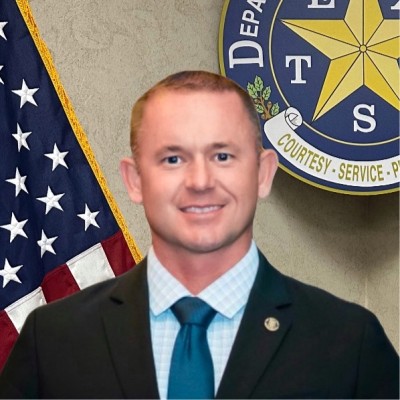 Since 2019, Anthony White has served as an esteemed adjunct faculty member in the TCU Department of Criminology & Criminal Justice, where he teaches Introduction to Criminal Justice. A graduate of the TCU Master of Science in Criminology & Criminal Justice Program, Anthony earned his Bachelor of Applied Arts and Sciences in Criminal Justice Administration from Tarleton State University.
Anthony serves as a sergeant with the Fort Worth Police Department, where he supervises the Northwest Criminal Investigations Unit Property Crimes Team and the department’s Metal Theft Unit. In addition, he is the founder and chair of Assist the Officer Fort Worth and serves as a Regional Director for the Combined Law Enforcement Associations of Texas (CLEAT).
In the following interview, Anthony shares his perspectives on teaching, as well as his experiences and accomplishments in the field of criminology and criminal justice.
Criminology & Criminal Justice: What characteristics of the TCU Criminology & Criminal Justice Department drew you to work here?
Anthony White: As both an alumnus of TCU’s Criminal Justice master’s program and a law enforcement practitioner, I was drawn to the department’s commitment to academic excellence, critical thinking, and real-world application. TCU does an outstanding job of connecting theory to practice, and I wanted to contribute by bringing current law enforcement experience into the classroom. The department’s faculty are highly respected scholars who genuinely care about student success and it is an honor to be part of that mission.
Criminology & Criminal Justice: What are your objectives in teaching the Intro to Criminal Justice course?
Anthony White: My primary goal is to help students gain a historical, foundational understanding of the criminal justice system while encouraging them to think critically about the challenges being faced. I want students to leave the course with a realistic understanding of each aspect of the criminal justice system while developing the analytical and communication skills that will serve them in any chosen profession.
Criminology & Criminal Justice: What are your favorite aspects of teaching?
Anthony White: The most rewarding aspect of teaching is watching students grow in confidence and understanding throughout the semester. Many of the students in my classes are not Criminology & Criminal Justice majors, so it’s rewarding to see them learn about a system that many citizens do not fully understand. I enjoy sharing real world experiences that help students connect classroom discussions to current events and professional practice. Having former students email me a year or two after graduation to share their successes or ask for a letter of recommendation is especially meaningful.
Criminology & Criminal Justice: What inspired you to pursue a career in Criminology & Criminal Justice?
Anthony White: My interest in criminal justice began with a desire to serve others and make a positive impact in my community. That calling led me to serve in the United States Marine Corps and eventually to a career with the Fort Worth Police Department, where I have been for 21 years. Throughout my career, I have been fascinated by the complexities of crime, the impact of victimization, and understanding the “why” behind criminal behavior.
One of the most impactful assignments of my career was serving as a detective in the Human Trafficking Unit for five years. Working closely with victims and hearing their stories provided a firsthand look at the devastating effects crime can have on individuals and families. Those experiences reinforced the importance of victim advocacy, offender accountability, and understanding the social and personal factors that contribute to criminal behavior. They also continue to influence the way I approach both law enforcement and teaching.
Criminology & Criminal Justice: Describe your current role as Sergeant and Metal Theft Unit Supervisor with the Fort Worth Police Department.
Anthony White: I currently serve as a Sergeant with the Fort Worth Police Department, supervising the Northwest Criminal Investigations Unit Property Crimes Team and the department’s Metal Theft Unit. My responsibilities include overseeing investigations involving property crimes, metal theft, and critical infrastructure theft impacting telecommunications, transportation, healthcare, and utility providers. I work closely with local, state, and federal partners, as well as private industry stakeholders, to identify offenders, disrupt organized criminal activity, and protect essential services that our communities rely upon.
Criminology & Criminal Justice: Describe how your service as Chairman and Founder of Assist the Officer Fort Worth has impacted you personally and professionally.
Anthony White: Founding Assist the Officer Fort Worth has been one of the most meaningful experiences of my career. The organization was created in 2016 to provide immediate assistance to officers and their families during times of crisis, and it has reinforced the importance of compassion and community support. Seeing a community come together to help officers during some of the most difficult moments of their lives is wonderful.
Criminology & Criminal Justice: What advice would you give to students interested in pursuing a career in Criminology & Criminal Justice?
Anthony White: Remain curious and never stop learning. Fight the urge to be comfortable or complacent. The criminal justice field is constantly evolving and successful professionals must be adaptable and committed to lifelong learning. Build strong communication skills, seek out internships and practical experiences, and remember that integrity and trust is the most valuable asset in your career.
Criminology & Criminal Justice: What are your overall goals within the field?
Anthony White: My goal is to continue making meaningful contributions while helping develop the next generation of professionals who will soon enter the workforce. Whether through law enforcement leadership, legislative initiatives, nonprofit service, or higher education, I hope to leave the profession better than when I started my career.
Criminology & Criminal Justice: What are your hopes and vision for TCU Criminology & Criminal Justice students?
Anthony White: I hope students leave TCU with both the knowledge and confidence to become ethical, innovative leaders in their chosen professions. Regardless of whether they pursue careers in criminal justice, business, or any other field, I want them to understand the importance of service, sacrifice, critical thinking, and making a positive difference in their communities.
Criminology & Criminal Justice: Of all your achievements, which do you cherish the most?
Anthony White: I’ve been fortunate to have some great opportunities throughout my career, but I’m most proud of my family. Watching my kids grow and being there for them means more than any professional accomplishment. On the law enforcement side, founding Assist the Officer Fort Worth and seeing the impact it has had on officers and their families is something I’ll always be proud of.
Criminology & Criminal Justice: What are your favorite pastimes?
Anthony White: At this stage of my life, during my time away from work you can find me on a golf course supporting my son’s competitive junior golf journey. Aside from that, I enjoy spending time with my family, attending sporting events, being outdoors, running and cycling.
|
|
|
| |
| |
|
| |
| Alumni Feature: Matthew Trinhle |
| |
| |
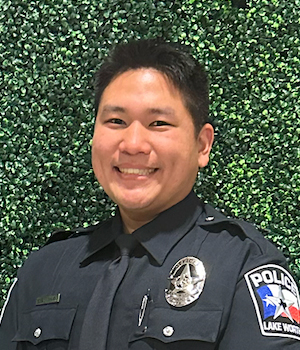 An esteemed May 2025 graduate of Texas Christian University with a Bachelor of Science in Criminology & Criminal Justice and a minor in Sociology, Matthew Trinhle serves as a Patrol Officer with the Lake Worth Police Department. A native of San Jose, he also served as President of the TCU Criminal Justice Society during the 2024–2025 academic year.
Criminology & Criminal Justice: Describe your experience of pursuing your Bachelor of Science degree in Criminology & Criminal Justice at TCU.
Matthew Trinhle: My experience as a Criminology and Criminal Justice student involved many hours reading and writing papers. It all felt so seamless though because of the passion of my professors and my peers. What I enjoyed the most were the in-class discussions about understanding the behavior and mindset of criminals. Having the opportunity to learn from professionals in the field and absorb the knowledge of my professors, I gained a familiarity of the criminal justice system as a whole that has served me well as an officer.
Criminology & Criminal Justice: Describe your current role as a Patrol Officer with the Lake Worth Police Department.
Matthew Trinhle: My role as a patrol officer revolves around protecting and serving the citizens of the Lake Worth community. For being such a small city, we receive lots of commuters coming in and out of our city daily. A large part of my job consists of educating people on traffic laws, stopping thefts, and taking reports. I use my presence as a tool to deter crime and prevent motor accidents on the road.
Criminology & Criminal Justice: What inspired you to pursue the areas of criminology and criminal justice as an educational and career focus?
Matthew Trinhle: I pursued a career in criminal justice because I wanted to help people. I’ve since learned that there are a variety of ways people can be helped, whether that be explaining traffic laws or listening to someone who’s having the worst day of their life express their frustrations.
Criminology & Criminal Justice: How has earning your Bachelor of Science degree from the TCU Department of Criminology & Criminal Justice helped you in your career?
Matthew Trinhle: Earning my undergraduate degree at TCU for Criminology & Criminal Justice has served me well in understanding my role in the entire criminal justice system. My role as a law enforcement officer is the entry point in the complex machine of our justice system. I take my job seriously with the responsibilities and honor the badge carries.
Criminology & Criminal Justice: What advice do you have for students who may be interested in pursuing a similar educational and career path as yours?
Matthew Trinhle: My advice to students who aspire to become police officers is to be humble about your strengths and weaknesses. You will always learn something new in this field, and you can easily become discouraged from setbacks. Use those experiences to your advantage and don’t be afraid to listen to the criticism of your peers. Surround yourself with people who will support you when things get tough, because you will more than likely face challenges in this field.
Criminology & Criminal Justice: What are your overall goals in the areas of criminology & criminal justice?
Matthew Trinhle: My goal is to become an excellent patrol officer and continue honing my craft. I would like to become an expert in auto-theft and be a leader within my department. My plan is to return to TCU and pursue my Masters in Criminology and Criminal Justice within the next five years.
Criminology & Criminal Justice: What are your favorite aspects of the TCU Criminology & Criminal Justice Department?
Matthew Trinhle: My favorite aspect of the TCU Criminology & Criminal Justice Department has to be the relationships I built with my professors. I enjoyed the time spent during office hours talking about criminology and getting to know them as people. They have been my biggest supporters in my pursuit of excellence!
Criminology & Criminal Justice: Of all of your accomplishments, which do you cherish the most?
Matthew Trinhle: I would say my greatest accomplishment has yet to happen. I am set to be married this summer to my fiancé and I am very excited to begin building our life together!
Criminology & Criminal Justice: What are your favorite pastimes?
Matthew Trinhle: My favorite pastimes involve watching movies with friends, reading, and eating good food.
|
| |
| |
|
| |
| Graduate Student Spotlight: Eddie Quintana |
| |
| |
| |
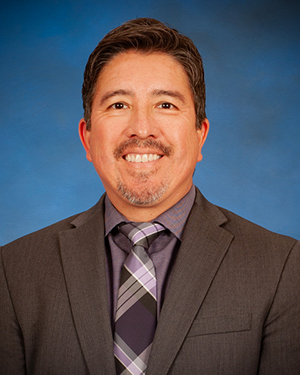 Eddie Quintana is an esteemed polygraph examiner and graduate student pursuing his Master of Science degree in Criminology & Criminal Justice at TCU. Learn about his professional and academic journey, as well as his experiences in the Criminology & Criminal Justice Graduate Program, in the following Q&A.
Criminology & Criminal Justice: Describe your experience in the TCU Department of Criminology & Criminal Justice Master of Science Program to date.
Eddie Quintana: My experience in TCU’s Department of Criminology & Criminal Justice Master of Science Program has been very positive. TCU is a great university with a lot of school spirit and a positive culture.
The program has been both challenging and rewarding. It is not easy balancing graduate school with work and family responsibilities. However, the professors and staff have been fantastic. They are extremely approachable, supportive, and always willing to answer questions or provide guidance.
The coursework requires dedication and hard work, but it has helped me expand my knowledge in a field where I have worked for 28 years. Overall, the support from the faculty and staff has made this a fulfilling and rewarding experience.
Criminology & Criminal Justice: What motivated you to pursue a Master of Science degree in Criminology & Criminal Justice?
Eddie Quintana: My wife motivated me to pursue a Master of Science degree in Criminology & Criminal Justice at TCU. She has always been my biggest supporter. As I near the end of my career, I would like to teach at the university level, and I believe earning a master’s degree will put me in the best position to do that.
I have also always considered myself a student of life. I am constantly looking for opportunities to learn, grow, and challenge myself. Pursuing this degree allows me to continue expanding my knowledge while preparing for the next chapter of my career.
Criminology & Criminal Justice: Are there any particular skills or knowledge gained from your experience in the graduate program up to this point that have already proved useful in your professional life?
Eddie Quintana: Yes. In my current role as a polygraph examiner, interviewing people is a significant part of what I do. The knowledge that I have gained through the program thus far, particularly regarding criminal behavior and the factors that influence decision-making, has proven useful in my profession.
Studying criminology has helped me better understand the motivations and circumstances that can contribute to criminal behavior. This has strengthened my ability to build rapport and ask better questions during interviews. It has also reinforced my belief that every person should be treated with dignity and respect, regardless of the crimes they may have committed.
By learning more about human behavior, I am able to communicate more effectively, establish trust more quickly, and gather more complete information during the interview process.
Criminology & Criminal Justice: Describe your current role as a Special Agent in the FBI.
Eddie Quintana: I have been an FBI Special Agent for 21 years. During that time, I have investigated a variety of criminal violations, including violent crime, public corruption, gangs, and transnational organized crime.
In my current role as a polygraph examiner, I conduct examinations for FBI applicants, employees undergoing security clearance investigations, subjects of criminal investigations, witnesses, and victims. My responsibilities include conducting interviews, analyzing information, and assisting fellow agents and outside investigators with criminal matters.
Interviewing is a significant part of my job and requires building rapport, demonstrating empathy, asking effective questions, and gathering accurate and complete information.
Criminology & Criminal Justice: What sparked your interest in the professional field you're in now?
Eddie Quintana: I was influence by my father, who served as a municipal police officer for more than 20 years. Growing up, I saw firsthand the impact that law enforcement can have on a community, and I knew from an early age that I wanted to work in the field of criminal justice.
I have a passion for the work and believe in the team approach to helping victims and holding offenders accountable. The opportunity to serve others and contribute to the pursuit of justice has been a motivating factor throughout my career.
Criminology & Criminal Justice: What are your favorite aspects of the TCU Criminology & Criminal Justice Department?
Eddie Quintana: My favorite aspects of the TCU Criminology & Criminal Justice Department are the quality of the faculty, the reputation of the program, and the challenge it provides. I am proud to be part of a highly ranked program, and all of my professors thus far are published scholars who have dedicated their careers to studying criminology and criminal justice. They are true experts in the field.
The program is not easy, but that is one of the things I appreciate most about it. It challenges me to learn, think critically, and continue growing professionally. I also appreciate how accessible and supportive the professors are. They genuinely care about student success and are always willing to answer questions and provide guidance when needed.
Criminology & Criminal Justice: What are your overall career aspirations?
Eddie Quintana: My overall career aspiration is to complete my career with the FBI. I will be required to retire in six years, and after earning my master’s degree, I would like to teach criminal justice courses at TCU.
Having spent so many years in the profession, I feel that I have a great deal of knowledge and experience to share with students who are considering a career in criminal justice. Teaching would allow me to give back to the profession and mentor the next generation of individuals entering the field.
Criminology & Criminal Justice: How would you encourage those interested in pursuing a similar educational and career path as yours?
Eddie Quintana: I would encourage anyone interested in this field to do their research. There is a wealth of information available online about different agencies and career opportunities. I would also encourage students to seek out internships, attend career fairs, and take introductory courses. These experiences can help you better understand the profession and determine whether it is a good fit for you. It is also a good idea to speak with professionals currently working in the field and learn about their experiences and career paths.
For those interested in law enforcement or other positions of public trust, it is important to maintain a good reputation, exercise sound judgment, and make decisions that will not limit future opportunities.
Criminal justice is a constantly evolving field. It needs dedicated people who are willing to serve others, continue learning, and adapt to new challenges. My advice is to pursue a career that genuinely interests you and aligns with your values. You will spend a significant portion of your life at work. Choose a career that you are passionate about and enjoy doing.
Furthermore, do not be afraid to try new things or fail. Some of the greatest lessons I have learned have come from mistakes and setbacks. Finally, never stop learning. Seeking out opportunities for professional growth will benefit you throughout your career.
Criminology & Criminal Justice: Of all your achievements, which do you cherish the most?
Eddie Quintana: Of all my achievements throughout my career, I most cherish the people I have had the opportunity to work with throughout my career. I have been fortunate to work alongside talented and dedicated individuals, and I have learned a great deal from them.
While I am proud of the work I have done, the relationships I have built and the lessons I have learned from others are what I value most.
Criminology & Criminal Justice: What are your favorite pastimes?
Eddie Quintana: I enjoy spending time with my family. I have been married for more than 27 years, and my wife and I have three wonderful children.
I am also a big sports fan. As a third-generation Dallas Cowboys fan, I proudly support the Cowboys and believe this will be our year! I also cheer for the Texas Rangers, the Dallas Stars, the Dallas Mavericks, and of course, the Horned Frogs!
I enjoy watching movies and am not shy about admitting that I enjoy a good romantic comedy or Hallmark Christmas movie. I also enjoy jogging and staying active.
|
|
|
| |
| |
|
| |
| Meet a LEAD Graduate |
| |
| |
| |
Bobby Castillo completed the TCU Leadership, Executive & Administrative Development (LEAD) Certification in May 2026. He has served with the Dallas-Fort Worth International Airport Department of Public Safety since 2020, following 15 years with the Killeen Police Department. He currently serves as a Patrol Lieutenant on the night shift and also holds collateral responsibility for the Crime Scene Investigations Unit. During his time at DFW Airport, Bobby first served as a Police Officer before being promoted to Sergeant, where he worked in the Patrol Division. He later transitioned to the Criminal Investigation Division, where he supervised the Crimes Against Persons Section prior to his promotion to Lieutenant. Bobby Castillo holds a Bachelor of Science in Criminology & Criminal Justice and completed the TCU Leadership, Executive & Administrative Development (LEAD) Certification in May 2026. He obtained the certification to continue growing as an effective leader. He is continuing his higher education journey at TCU by pursuing a Master of Science in Criminology & Criminal Justice.
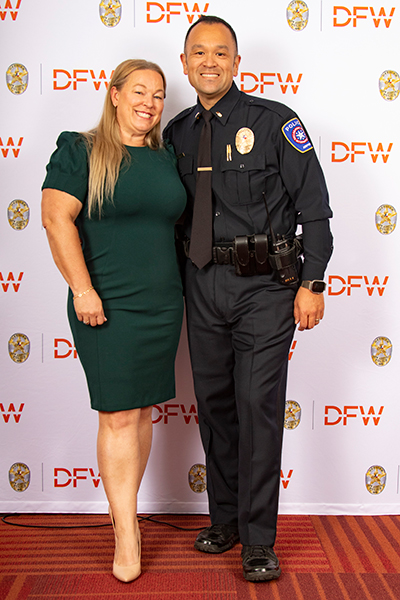 Criminology & Criminal Justice: Describe your experience in LEAD.
Bobby Castillo: The LEAD experience has been like no other development program I have attended in more than two decades of public service. Most law enforcement development programs tend to be lecture based and focused primarily on best practices. What makes LEAD unique is that it is two-fold. It provides a strong academic foundation taught by some of the best professors in the country, while also bringing in the practitioner side through some of the most respected and recognized chiefs in the metroplex. That combination provides not only the “why” behind best practices and policies, but also the “how” when it comes to real-world application in serving our communities. LEAD has helped bridge the gap between theory and practice in a way that I believe is missing from many other programs.
Criminology & Criminal Justice: What does completing your TCU LEAD Certification mean to you?
Bobby Castillo: Successfully completing this program gives me a great sense of accomplishment. I know LEAD has provided me with the knowledge, perspective, and tools to be a more effective servant leader as I continue down my career path. In my opinion, there is no other program that better prepares someone for executive roles in a public safety organization. Just as important, my cohort is made up of many rising leaders from across the region, and that network is invaluable. I know I can reach out to them, seek advice, and rely on them when challenges arise. Additionally, completing this program marks the beginning of my next academic chapter, as I continue at TCU to pursue my master’s degree. Go Frogs!
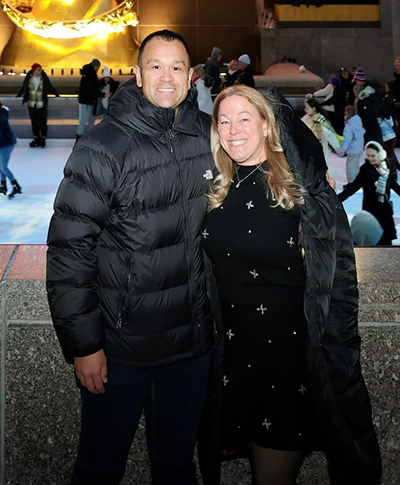 Criminology & Criminal Justice: What are your favorite aspects of LEAD?
Bobby Castillo: There are several great aspects of the LEAD program that really make it stand out. First, the class brings together local leaders from various departments in a small classroom setting. That environment allows you to bring real work-related issues to class and receive insight and guidance from classmates who understand the challenges and can help you think through solutions. Second, the professors, both from academic and practitioner backgrounds, allow us to engage in pure, raw, and unfiltered discussion. That culture of welcoming diverse thoughts ensures everyone has the opportunity to share their experiences without judgment. Finally, one of my favorite aspects is the genuine care and concern shown by the professors. They have demonstrated that they are not there just to teach. They have built strong and meaningful relationships with each of us that will last a lifetime. Most importantly, they constantly provide personal advice and mentorship to help us grow and progress in our careers.
Criminology & Criminal Justice: Are there any particular skills or knowledge gained from your LEAD experience that have already proved useful in your professional life?
Bobby Castillo: I have been able to take several things from my LEAD experience that have helped elevate me in my current role. In reflecting on the program, the most valuable skill I have gained is a stronger sense of empathy and the importance of humanizing the officers we lead. Quite often, leaders, myself included, become fixated on accomplishing the daily mission set out by the organization without fully considering the human toll that mission can take. We sometimes forget that every mission comes at a cost, and it is our responsibility to ensure that the health and well-being of our officers, including their mental health, remains a priority. A recent example involved an officer who came to work without much sleep. Working the night shift already takes a toll on a person, and this officer had made the choice to attend his son’s baseball game so he could remain involved with his family, even though most of his children’s activities take place during the day when he should be resting. Without hesitation, I allowed him to take a two-hour nap at the station. That gave him the rest he needed to be better prepared to serve our community, but more importantly, it showed him that his leadership cares about him not only as an officer, but also as a father and husband.
Criminology & Criminal Justice:What inspired you to pursue a career in law enforcement?
Bobby Castillo: My inspiration for pursuing a career in law enforcement started when I was a child. There was a police officer who lived down the street from me who would come home in his patrol unit. Every time I saw him and his car, I stood in awe of how professional he appeared. As I matured through my teenage years, I gained more insight into the duties of law enforcement and the service it requires. I knew then that I wanted to serve others, protect the defenseless, and be a glimmer of hope to those who feel they have none.
Criminology & Criminal Justice: Describe your current role with the DFW International Airport.
Bobby Castillo: I am currently a Lieutenant in our Patrol Division assigned to one of our night shifts. Another Lieutenant and I oversee 23 patrol officers and three sergeants. In addition to my patrol responsibilities, I also have collateral duties as the Commander over Crime Scene Investigations. That team is responsible for the collection and processing of evidence related to a variety of crimes while ensuring the use of highly regarded scientific and forensic methods.
Criminology & Criminal Justice: What advice do you have for students who want to pursue a career in law enforcement?
Bobby Castillo: My advice to any student wanting to pursue a career in law enforcement is to be honest with themselves and truly question their “why.” There are too many movies and television shows that glorify law enforcement and create a false narrative about the daily duties of the profession. If their reason is simply to carry a gun and drive fast with lights and sirens, then they need to consider another career field. Although those things can be part of the job, their heart has to be focused on being a public servant. That service can take many forms and can change by the hour. One minute, you may be making a robbery arrest, and the next, you may be acting as a social worker trying to calm a family disturbance that has been ongoing for years. In law enforcement, you will wear many hats, and you have to make sure your heart is truly in it to be effective.
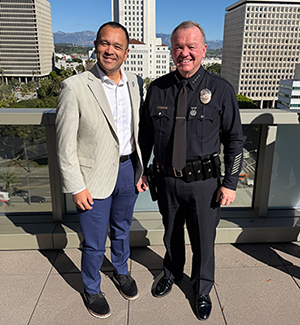 Criminology & Criminal Justice:How would you encourage those who are considering applying for LEAD?
Bobby Castillo: I would encourage anyone considering applying for LEAD with four letters and two simple words: DO IT! I would first say that this program is designed for those who want to become executive leaders within their departments. The curriculum and conversations go far beyond first and second-line supervision. This is not the standard law enforcement supervision course that many of us have attended. The LEAD program provides executive-level knowledge and highlights the practices used in today’s progressive leadership methods. It also connects you with current and future leaders from across the metroplex who can serve as valuable resources when you are faced with challenges or need guidance.
Criminology & Criminal Justice: What are your overall career goals?
Bobby Castillo: My overall career goal is two-fold. From a personal achievement standpoint, I aspire to attain the rank of Deputy Chief or Assistant Chief. I believe that reaching that level will allow me to influence a broader audience and have a greater impact than I can within my current role as a Lieutenant. More importantly, however, my goal is to be the kind of effective leader my officers deserve. I must ensure they remain a priority in my decision-making and that I am helping support not only their professional goals, but also, and most importantly, their personal goals.
Criminology & Criminal Justice: Of all of your accomplishments, which do you cherish the most?
Bobby Castillo: I have achieved many professional accomplishments throughout my career, but the ones I cherish most are those that have positively affected the lives of my peers. I previously worked at the Killeen Police Department, where much of my focus was on the enforcement of intoxicated driving laws. I also had the opportunity to teach a variety of courses related to that subject for the Killeen Police Academy, the Central Texas College Regional Police Academy, and through a state grant that allowed me to travel across Texas to provide instruction. One accomplishment that means a great deal to me involves a friend who is now a Texas State Trooper and previously worked with me at Killeen PD. He was awarded the 100 Club of Central Texas Outstanding Law Enforcement Officer Award for his accomplishments with DPS. After being notified of the award, he called me and told me that I had inspired him during his time at Killeen PD. He shared that the department’s DWI enforcement and education efforts provided him with the knowledge required to effectively identify and remove impaired drivers from the roadways. Knowing that I had a positive impact on a fellow officer means more to me than any professional award or recognition this career could provide.
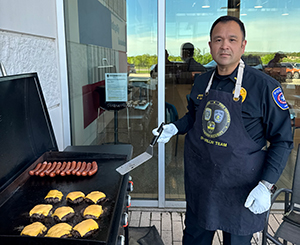 Criminology & Criminal Justice: What are your favorite pastimes?
Bobby Castillo: One of my favorite pastimes is traveling the world and experiencing different cultures and food with my wife. We love to travel and have had the opportunity to do it often, although we had to slow down a bit while I was in LEAD since the program met in person two days a week. It was a worthwhile tradeoff, and we are already looking forward to traveling again next month as I transition into the Criminology & Criminal Justice Master of Science Program. We are also big baseball fans and have visited many ballparks across the country, but we are loyal Rangers fans at heart. One of our long-term goals is to make it to all seven continents, although Antarctica may take a little extra planning. |
|
| |
| |
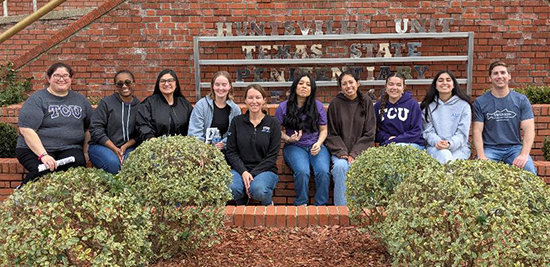
Recap of Field Trip to the Texas State Penitentiary in Huntsville from Undergraduate Program Director Dr. Katherine Polzer
|
|
We had another successful trip to Huntsville this February! Nine outstanding students and two faculty members, Dr. Rashaan DeShay and myself, made the epic trip down I-45. Our first stop was the Wynne Unit, known as a prison of industry, and we had the opportunity to see some amazing happenings behind bars. They showcased the Computer Recovery Warehouse, where inmates learn to code, fix old computers, install programs, and complete other advanced technological work.
Next, we visited the mattress making factory, where they make all the mattresses for the prisons and jails in Texas and for all the Texas universities; license plate facility; woodworking shop, where all of the beautiful and ornate city, county, and state crests outside government buildings are made by the inmates; and an engine repair school that focuses on small diesel and semi-truck engines.
We also walked through the hallway that houses many classrooms and libraries for a host of educational pursuits, including GED classes, college classes, and other continuing education classes. Further back from this area is the agriculture area, where they grow a lot of different types of fruits, vegetables, and grains that are used in the prisons. There is so much happening in this prison. On the way out, we stopped by the beautiful, stain glass chapel where inmates of any faith can worship. This prison also has a unique moniker as the “most profitable prison in the world.”
Our next tour was the Huntsville Unit, also known as the Walls Unit. It was the first prison built in Texas, and the original parts have been preserved. We were able to walk through this part and learn about the potential ghosts and hauntings in this area of the prison. Some television shows that explore paranormal activity have actually traveled here to see if they can detect anything! This is also where Texas executes inmates.
In the past, we have been able to go in and see the few cells where the condemned is held once they are brought there before execution, as well as the execution chamber. There is a new warden who has restricted access to this part of the prison tour. On past tours, certain wardens will allow tour groups to enter.
On the other side of the prison, the Huntsville Unit also has an arts and crafts shop, where inmates make all sorts of incredible wares such as furniture, jewelry, leather goods, and boots that are ordered by the Texas Rangers — the law enforcement agency, not the 2023 World Series Champions! 😉 Inmates can obtain a space /working area in the craft shop and, over time, actually build up a business. We acquired a few fliers from some of the inmates displaying their goods and costs.
It was a very eye-opening and educational experience. We left feeling humbled, sad, hopeful, empathetic and with a renewed sense of optimism. It is incredible to see what is happening behind some of these prison walls, as well as the transformative power of some of these programs on the lives of inmates. And, of course, on the way back Dr. DeShay and I had to stop at Buc-ees!
|
|
| |
| |
2026 Criminology & Criminal Justice Department Award Winners
The Criminology & Criminal Justice Department was honored to recognize several students who achieved excellence during the 2025-2026 academic year. Honorees received their awards at the department Senior & Awards Celebration on Wednesday, April 22nd. In addition, the department awarded TCU Director of Emergency Management Sean Taylor the Internship Site Award for his collaboration with Criminology & Criminal Justice Internship Director Dr. Ronald "Chip" Burns regarding the provision of invaluable internship opportunities for students.
The award recipients are as follows:
Field Research Award
Samantha Stone
Gable Delp
Early Achievement Award
Ayomide Lowo
Capstone Scholar
Bailey DeLuca
Shane Davidson
Senior Scholar Award
Sophia Baugess
Cole O'Brien
Department Service Award
Edward Stuart
Macie Ratliff
Outstanding Paper Award
Lillian Williams
Faculty are pleased to congratulate these students on their outstanding accomplishments and contributions to the department.
|
|
AddRan College of Liberal Arts
Department of Criminology & Criminal Justice
Scharbauer Hall 4200
2855 Main Drive
Fort Worth, Texas 76109
Get Directions |
|
|
|
|